28 November 2023

Accommodation and catering often has the second highest environmental impact of an event after transportation 1 2 3 and so choosing a sustainable venue for your event can make a big difference in your environmental impact. Venues are increasingly transparent about their sustainability measures and commitments, and information can be found on their website or by speaking with staff.
So what are the key factors to consider when looking for a sustainable venue?
24 October 2023
Travelling represents the largest carbon impact of an event. It can count for up to 56% of the whole event’s carbon footprint 1, and the impact is significantly higher when international participants use flights to reach the event.
With this in mind, we were delighted to award a Sustainable Conferencing Grant to Dr Serena Stanga who came with a solution that combined technology with alternative travelling, leading to a reduction in travel carbon footprint for her symposium “In pursuit of healthy brain aging: unveiling the biology of novel age-related mechanisms leading to dementia”, which was part of the 20th National Congress of the Italian Society for Neuroscience (SINS) 2.
21 September 2023

To develop her own understanding of tissue regeneration, Grace Holmes, a master’s student from the Royal Veterinary College, used a Travelling Fellowship from Development to visit the Echeverri lab at the Marine Biological Laboratory in Woods Hole, Massachusetts. There, she explored the role of Leucine Rich Repeat Kinase 2 (LRRK2), a protein associated with Parkinson’s disease in humans, in regeneration.
30 August 2023
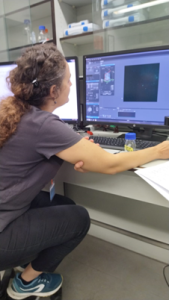
To develop her own understanding of neural mapping, Federica Pizzulli, a PhD student from the Biology and Evolution of Marine Organisms Department of the Stazione Zoologica Anton Dohrn in Naples, used a Travelling Fellowship from Journal of Experimental Biology to visit the Seuntjens lab at KU Leuven, Belgium. The lab was the first to adapt in-situ Hybridization Chain Reaction (HCR) to Octopus vulgaris.
10 August 2023
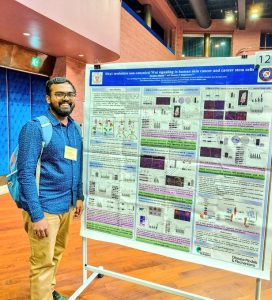
Darshan Mehta is a PhD student studying the mechanisms behind skin cancer at the Tata Memorial Centre Kharghar, Navi Mumbai, India. He took the opportunity to use a Conference Travel Grant from Disease Models & Mechanisms to travel to the 2023 Gordon Research Conference (GRC) on Stem Cells and Cancer – a meeting intended to explore cutting-edge research in the field of cell biology and cancer.




You must be logged in to post a comment.