

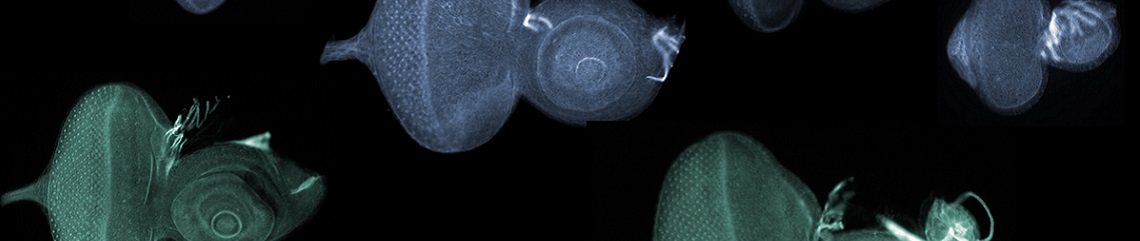
Exploring regeneration in Woods Hole, Massachusetts
21 September 2023
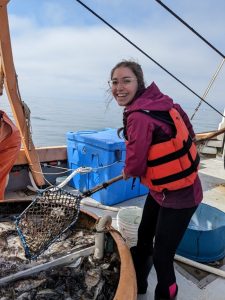
To develop her own understanding of tissue regeneration, Grace Holmes, a master’s student from the Royal Veterinary College, used a Travelling Fellowship from Development to visit the Echeverri lab at the Marine Biological Laboratory in Woods Hole, Massachusetts. There, she explored the role of Leucine Rich Repeat Kinase 2 (LRRK2), a protein associated with Parkinson’s disease in humans, in regeneration.
Exploring Skin Cancer Molecular Mechanisms: a Travel Grant experience at the Gordon Research Conference
10 August 2023
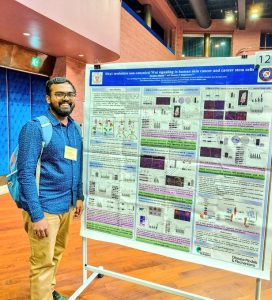
Darshan Mehta is a PhD student studying the mechanisms behind skin cancer at the Tata Memorial Centre Kharghar, Navi Mumbai, India. He took the opportunity to use a Conference Travel Grant from Disease Models & Mechanisms to travel to the 2023 Gordon Research Conference (GRC) on Stem Cells and Cancer – a meeting intended to explore cutting-edge research in the field of cell biology and cancer.
Linking diverged gene expression inside complex neuronal circuits with behavioural traits of Medaka
12 June 2023
 Asymmetries in size between the left and right sides of the central nervous system are often associated with asymmetries in neuronal organisation. Current literature suggests that variations in the activities of genetic pathways underlie these asymmetries, which in turn may cause variation of behavioural traits.
Towards a deeper understanding of neuronal susceptibility to neurodegeneration
25 April 2023
Multiple sclerosis (MS) is a central nervous system demyelinating disease with heterogeneous clinical manifestations. Most MS patients start with reversible neurological deficits, which is the relapsing-remitting MS (RRMS) subtype that could be controlled by disease-modifying therapies and anti-CD20 therapeutics.
A Travelling Fellowship revealing the age-old movements of killer whales
3 March 2023
The teeth of killer whales grow in layers, layers that can be analysed to reveal the diet of an individual animal, over the course of a specific time frame. Material from inside the teeth cavity, known as dentine, can be extracted and stable isotope analysis used to investigate ecological behaviours such as large-scale movements. Maeva Terrapon, a student from the University of St Andrews used a Travelling Fellowship from Journal of Experimental Biology, to investigate the ecology of killer whales alongside fellow researchers at the Department of Fisheries and Oceans (DFO), Winnipeg, Canada.
Mapping Neuromodulator expression in Octopus vulgaris: Travelling Fellowship from Journal of Experimental Biology
30 August 2023
To develop her own understanding of neural mapping, Federica Pizzulli, a PhD student from the Biology and Evolution of Marine Organisms Department of the Stazione Zoologica Anton Dohrn in Naples, used a Travelling Fellowship from Journal of Experimental Biology to visit the Seuntjens lab at KU Leuven, Belgium. The lab was the first to adapt in-situ Hybridization Chain Reaction (HCR) to Octopus vulgaris.
A Travelling Fellowship to explore ecotoxicology, PVC and the sea
24 July 2023
Plastic leachates are chemicals that migrate from plastics to the surrounding aquatic environment composed by mixtures of additives. These chemicals form a solution of organic and inorganic pollutants which represent a serious problem to the environment, as they can induce toxicity in both diatom and copepod populations at the base of the food chain. Rocío Soledad Pazos, a postdoc from National University of La Plata, used a Travelling Fellowship from Journal of Experimental Biology to visit the Flanders Marine Institute (VLIZ) in Ostend, Belgium – here she was able to investigate the impact of leachates on the environment.
A trip to Ireland for human organoid engineering – a Travelling Fellowship story from Disease Models & Mechanisms
16 May 2023
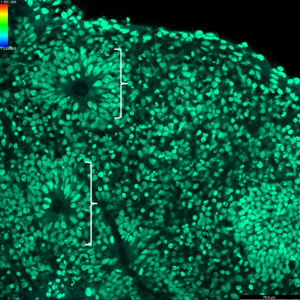
Neurodevelopmental disorders (NDDs) represent a growing challenge in modern medicine and may give rise to impaired cognition, communication, and psychomotor skills. It is therefore very important that more sophisticated in vitro models are created to reveal the complexities of these disorders.
An ‘electric’ Travelling Fellowship – putting transmembrane potential to the measure.
3 March 2023
The transmembrane potential (Vmem) is the difference in electrical potential across a cell membrane, acute changes in Vmem can result in multiple differences in cellular signalling pathways and cell processes such as differentiation, proliferation and cell:cell communication.
Decolonising and Diversifying Biosciences Education – a focus on inclusivity and sustainability
8 March 2023
By Catherine Mansfield
The symposium ‘Decolonising and Diversifying Biosciences Education’ took place from 19-20 December 2022 at Robinson College, Cambridge. This meeting was organised by Dr Catherine Mansfield, Dr Katharine Hubbard, Dr Tina Joshi and Isaiah Ting, with funding and support from the Society for Experimental Biology.
You must be logged in to post a comment.