

The Company of Biologists’ journal archive
The Company of Biologists has a rich publication history, with three of our journals going back more than 100 years. Our journals cover different areas of biology and include work from outstanding researchers. Providing access to our digital archive sets your researchers up for optimal content discovery.
3 journals • 1853-2004 • 34,000+ articles
Fully accessible content* • 60+ Nobel Prize winners
Our journals
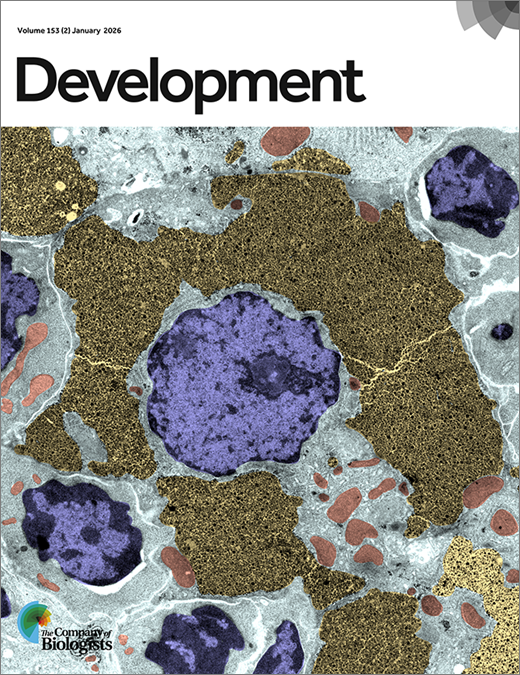
Development is the leading community journal in developmental biology. It publishes research and reviews across the spectrum of animal and plant developmental biology and incorporates the stem cells and regeneration fields.
Development is a continuation of Journal of Embryology and Experimental Morphology.
Archive dating back to 1953
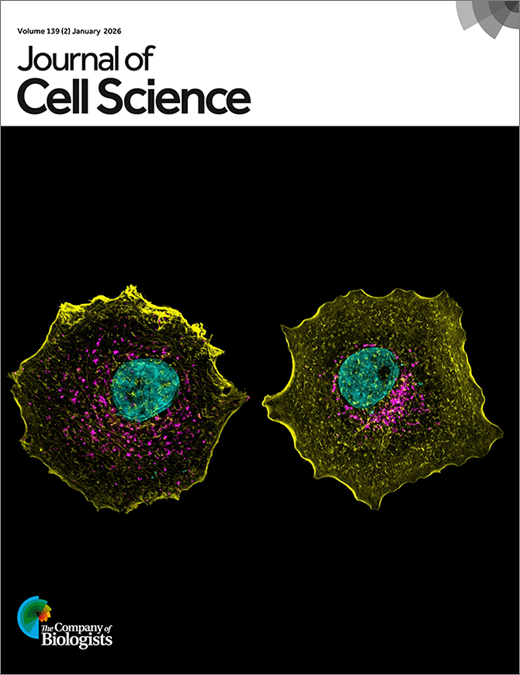
Journal of Cell Science (JCS) publishes cutting-edge science, encompassing all aspects of cell biology. The research and reviews articles in the journal challenge understanding and stimulate interest, showcasing scientific excellence in cell biology.
JCS is a continuation of The Quarterly Journal of Microscopical Science.
Archive dating back to 1853

Journal of Experimental Biology (JEB) is the leading primary research journal in comparative physiology and biomechanics. It publishes papers on the form and function of living organisms at all levels of biological organisation, from the molecular and subcellular to the integrated whole animal.
JEB is a continuation of The British Journal of Experimental Biology.
Archive dating back to 1923
Besides our three hybrid journals, we also have two fully Open Access journals: Disease Models & Mechanisms and Biology Open. All articles published in these two journals are free to read and share for everyone.
Our commitment
Our in-house teams have worked hard over the past few years to make our archive as complete and as accessible as possible. *All PDF-only content has been converted to fully searchable full-text html content, offering the following benefits:
- better discoverability and search engine visibility – HTML is natively readable by search engines, which boosts article visibility and citation potential
- enhanced navigation and interactivity – HTML allows users to jump to specific sections, figures, or references within the document and supports hyperlinked references and embedded multimedia
- integrated linking – HTML provides direct, clickable links from bibliography references to the full text of cited articles, as well as links to other related articles, enhancing research connectivity
- better searchability – HTML format makes it easier to locate specific keywords or author names directly within the text
- accessibility – HTML adapts to screen readers, text to speech tools, and accessibility standards (WCAG); users can adjust font size, contrast, and layout
- responsive design for all devices: HTML automatically adjusts to phones, tablets, and desktops
- faster page-loading speeds
In addition to this:
- the original journals have been reproduced in full, including journal covers, content listings, prelims, plates and maps
- each article has a DOI, making full reference linking to the archive content possible via CrossRef
- user metrics are available on all archive content
Our offer
We offer our institutional partners several options of purchasing access to the digital archive:
- on a journal-basis (any journal of your choosing)
- on a portfolio basis (all three journals as a package deal)
Our sales team is very happy to discuss our offer with you, making sure that you get the right access for your researchers’ needs.
You must be logged in to post a comment.