

How Global South Research Can Shape the Future of Comparative Physiology
Date: 10 – 13 March 2024
Location: Skukuza conference centre, Kruger National Park, South Africa
Organisers: Kênia Cardoso Bícego and Andrea Fuller
Comparative physiology, a discipline of physiology that exploits the understanding of how different animals function, provides the critical link to understand how organismal performance determines geographical distributions of animals. The many exquisite adaptations to extreme environments also provide valuable animal models to understand disease mechanisms and contribute to understanding drivers for major evolutionary transitions.
With rapid habitat loss and climate change, we are witnessing a devastating loss of biodiversity, and there is a need to define how and why certain species are vulnerable or resilient to climate change, loss of biotopes and fragmentation of natural areas. Robust predictions and useful advice for policy makers require that we fully integrate understanding at various levels of biological organisation (genomes, population genetics, cellular and organ functions) in organismal biology to appreciate how the intact organism interacts with its environment. This approach has been the hallmark for comparative physiology over the past decade and we now need to translate our classic approach of “blue sky research” to maintaining planetary health.
The Global South is rich in biodiversity, but its research is poorly represented in comparative physiology, a field that benefits from the functional diversity among species to elucidate physiological mechanisms.
We aim to enable early-career researchers from the Global South to exchange ideas and, in particular, to discuss research approaches and resources that are needed for future comparative physiology research with leading experts in the field.
A subsequent network of support that allows these early-career researchers to develop strong research teams in their home countries will benefit the growth of comparative physiology, through more global participation in national and international conferences, and through innovative new projects, publications and views from the Global South.
We will focus on the following topics:
- The history of comparative physiology
- How we define modern comparative physiology
- How to successfully integrate knowledge from various levels of biological organisation (linking genotype to the phenotype in the environment)
- Research approaches and methods in modern comparative physiology
- The value and future role of comparative physiology
- How comparative physiology can better inform other disciplines
- The value of comparative physiology in education
- Opportunities for Global South researchers in comparative physiology
- Resources and networks needed to support Global South researchers
Organisers & speakers
Kênia Cardoso Bícego São Paulo State University, Brazil
Andrea Fuller University of the Witwatersrand, South Africa
C. Loren Buck Northern Arizona University, USA
Hannah Carey University of Wisconsin-Madison, USA
Christine Cooper Curtin University, Australia
Craig Franklin University of Queensland, Australia
Luciane Gargaglioni São Paulo State University, Brazil
Michael Hedrick California State University, East Bay, USA
Andrew Makanya University of Nairobi, Kenya
Shane Maloney The University of Western Australia, Australia
Edward Snelling University of Pretoria, South Africa
Adalberto Luis Val Brazilian National Research Institute for the Amazon, Brazil
Dehua Wang Shandong University, China
Tobias Wang Aarhus University, Denmark
Terrie Williams University of California, Santa Cruz, USA
Early-career researchers
We offer 20 funded places for early-career researchers from the Global South* to attend our Workshops along with the 15 invited speakers. We define early-career researchers (ECRs) as anyone who has completed their PhD in the last 7 years, although there may be flexibility in some cases. If you would like to attend, please complete the online application form and include a one-page CV as well as a letter of support from your host (postdocs) or a head of school/head of lab/senior staff member if you are no longer a postdoc. Letters of support can be sent to us directly by the author if preferred. Please send them to workshops@biologists.com.
All attendees are expected to actively contribute to the Workshops by asking questions at presentation sessions and taking part in discussions, as well as giving a short talk about their research.
At some Workshops, early-career researchers are given additional responsibilities to promote their involvement, such as:
- Summarising the previous day’s themes to set the scene for the next day’s sessions
- Proposing future directions and collaborations
- Making a short, two-minute video about their experience at the Workshop
Most of these activities would be carried out in pairs or small groups and often with the support of more senior scientists present.
N.B. We are accepting applications from Global South ECRs only for this Workshop.
Accommodation, food and Workshop costs will be covered for all attendees.
Travel grants
As part of our commitment to supporting researchers in Global South regions, we will be providing travel grants to successful early-career researchers. Travel grant details:
- Applicant must be based in a Global South Country
- We require a supporting statement detailing why funding is required
- Maximum £700 per person
As our Workshop is to support local scientific research, applications from South Africa will be given some priority during selections.
* www.fc-ssc.org/en/partnership_program/south_south_countries
This is a list of countries with low-income or middle-income economies. The list is defined by the Finance Center for South-South Cooperation. Since 2017, FCSSC has been in Special Consultative Status with ECOSOC of the United Nations.
About Skukuza and the Conference Centre
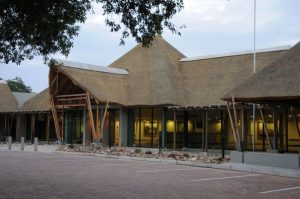
Delegates will stay at Skukuza Rest Camp and experience some of the iconic wildlife in the Kruger National Park through game drives and a dinner out in the bush.
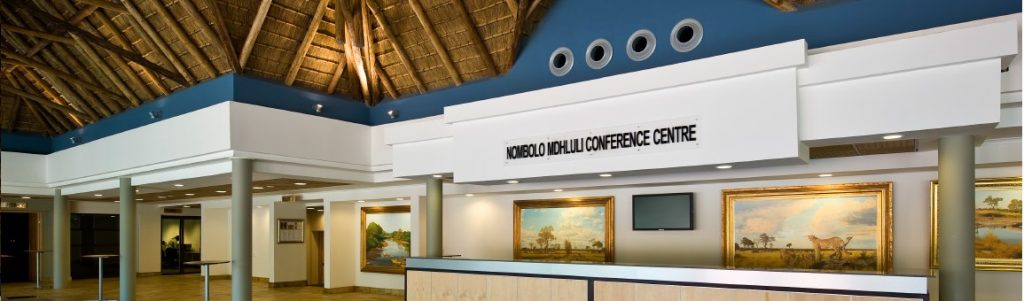
The state-of-the-art conference facility is set in the heart of Skukuza Rest Camp, within walking distance of the Skukuza Safari Lodge. It presents a unique opportunity for a relaxed conference atmosphere with its own ambience.
We plan to provide a bus to Skukuza from Johannesburg airport. More details will be provided to successful applicants.
You must be logged in to post a comment.