


16 June 2026
What are SDGs?
Adopted by the UN’s member states, the 17 Sustainable Development Goals (SDGs) were created to offer a guide of all the actions that should be taken in redesigning the world in a sustainable manner that will allow the climate to not surpass the 1.5ºC threshold by 2030 according to the Paris Agreement. While this threshold might already be surpassed, it has become even more crucial today to implement the Sustainable Development Goals across industries.
These goals are a mixture of environmental, social and economic goals that combined will ensure a sustainable future.
Since there are only four years left to achieve the Sustainable Development Goals, we have put together a guide on how to include them when organising an event. Don’t worry, it is easier than it sounds, and you might already do this without even realising.
 Which SDGs could we approach in our events organisation and how?
We would recommend studying all 17 SDGs and see which one matches your event’s scope the best. Whether it is an educational or a practical action, every contribution matters. Here are some examples of what you can do for a selection of SDGs.
SDG 2: No hunger
While food is enhancing the experience of connecting with each other, events can be organised in such a manner that they will minimise food waste. Work together with the chefs of your event in order to make sure that any leftovers that are still good for consumption will be donated to food banks or families in need.
SDG 4: Quality of education
Events are a great occasion for spreading information and improving access to knowledge. Make the information of your event easily accessible. Organising your event in a hybrid format will allow people that cannot otherwise afford to attend in person the possibility to gain access to quality presentations, resources and connections that can progress their career. When designing your event, have in mind how to offer access to quality educational sources.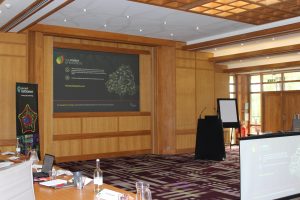
SDG 5: Gender equality and SDG 10: Reduce inequalities
These two SDGs can easily be combined by the EDI agenda of the event. Inclusivity should offer equal opportunities for people from various backgrounds to participate, be a speaker and organise the event. Therefore, these two SDGs can be reflected in multiple aspects of the event: offering access to the event for people who would otherwise not be able to join but also creating opportunities for speakers from various backgrounds to present and share their perspectives. Hiring sign language interpreters, creating nursery rooms or choosing a venue that provides full accessibility for people with mobility disabilities are just some actions that an organiser can take to ensure that they facilitate people from various backgrounds having equal opportunity to participate or speak at the event. Finally, recruiting employees for organising your event having diversity and inclusion on your mind, while promoting collaboration with other stakeholders which are in line with these SDG principles.
SDG 8: Decent work and economic growth
An event can offer many jobs to the local communities. Try to promote small businesses when ordering your badges or menus. Hire local people and use local resources as much as possible to help the economic growth of the region where the event takes place.
 SDG 12: Responsible consumption and production
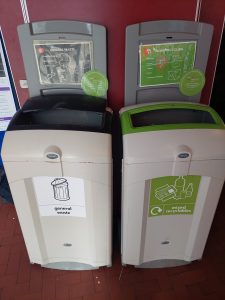
Events can be extremely wasteful and promote activities that are misaligned with the transition to a circular economy. Organising your event in a manner that all the procurement done and discarded is made to support the transition to a more circular economy is paramount to support the SDG 12. Some actions that can be taken are to refuse single-use plastic, extend the life of the products used and make sure that everything you buy for this event is sourced and can be discarded sustainably. Can your event run without a product? Say no to everything that is not critical for your event to run smoothly and source everything only from ethical and sustainably certified suppliers. To learn more about how to implement circular economy principles in your event’s organisation process, please check our guide (part 1 and part 2).
SDG 13: Climate change
Count and make sure it runs mainly on renewable energy sources. Collaborate with venues and accommodation that share your sustainable concerns to make sure that the overall environmental impact of your event will be minimised. We would also recommend considering a virtual or hybrid format for your event, if possible, to minimise the carbon footprint. If you have any idea about how to accommodate this format at your event in an innovative way, we encourage you to apply for a grant from our Fund for Innovation in Sustainable Conferencing.
What about the other SDGs?
All SDGs can be implemented into your event. You could even find a charity that supports one or more of these SDGs and encourage the participants to donate to it. Study all the 17 SDGs closely and see what would match yours.
You must be logged in to post a comment.