

20 March 2026
Since the circular economy was originally defined based on the Reduce-Reuse-Recycle (3Rs) strategy, the concept has now expanded to include more Rs that minimise waste. Following up from the first part of our circular economy guide for events, we have analysed the additional circular economy concepts and how they can be adapted in the world of scientific conferences.
Refuse – no products, no waste
Could this event run without it?
The best way to minimise consumption is by not consuming at all. For instance, some organisers have given up printing roller banners for their conference. Refusing to offer anything that is not crucial to run an event will aid in minimising its carbon footprint and, on a larger scale, reduce the demand for unsustainable products.
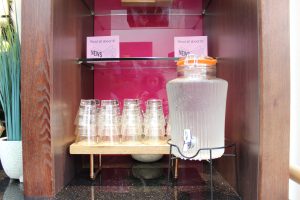
Event organisers can also refuse to offer beef or lamb as meal options during the event. Another important step to accelerate the transition to the circular economy is to avoid single-use plastic products, such as single-use straws, which provide no added benefit to an event.
Rethink – smarter and better
Can we rethink how we use certain objects in a way that would extend their lifespan?
For instance, we can design a banner in a format that can be used for multiple events rather than tailoring a separate one for every event you organise.
Can we rethink the whole event format?
Since the pandemic, we learned that travelling is not always required to bring people together. We can still bring everyone to one place online rather than by plane. Running your meeting in a hybrid or remote format is the best thing you can do to maximise sustainability at your event. This reduces air miles and makes the event more accessible to people who cannot travel due to various constraints. Check out how Serena Stanga (Neuroscience Institute Cavalieri Ottolenghi, University of Turin, Italy) and Chrissy Hammond (University of Bristol, UK) designed their hybrid meetings to decrease their carbon footprint and increase inclusiveness.
However, this format is not yet ideal. It is still difficult to replicate in-person interactions during an online conference, and we are keen to support new concepts that can change that. Check out how Sally Lowell reimagined the format of a meeting into a multi-party format to reduce air miles without reducing the in-person interactions.
The circular economy is an opportunity to be creative and explore new ideas. Challenging the status quo can lead to innovation that improves how we do things. If you have an innovative idea to transform the way we organise academic events online, let us take the financial burden from you through our Fund for Innovations in Sustainable Conferencing.
Repair
Can it be fixed?
Depending on the nature of your event, you may need to work with products that are breakable. While the first thought that pops into our mind when we break something is to dispose of it, we should first consider how we could fix it instead. This will make a difference from ending the life of a product to further extending it.
Repurpose – same objects, more destinations
Can someone’s waste become your resource?
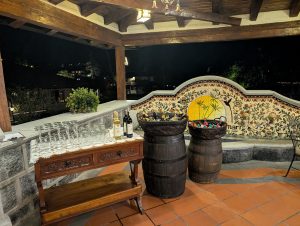
This principle encourages us to consider whether we can extend the function of an object that would otherwise be discarded. For example, with a bit of imagination, some old wood panels can be transformed into chairs and tables for your event instead of being discarded. You can collaborate with suppliers that sell repurposed products and see if you can prioritise their products as an alternative to the conventional suppliers. Another possible course of action is to evaluate whether any of your potential waste could be a resource for someone else and donate it to those who can give it a second life.
Let your imagination flow!
Is that all?
The circular economy is a world of ideas rather than a set of rules. While it will also create more than 700,000 new jobs in the EU alone, the circular economy will limit biodiversity loss and support the reduction of global greenhouse gas emissions. This is a win-win concept.
The secret to successfully applying the circular economy in your event organisation is to start thinking outside the box, like there is no box. Being inventive and exploring alternative ways that can extend the life cycle of products will only increase the positive impact of your event and make it more memorable. For additional guidance on incorporating circular economy concepts into your events, do not hesitate to get in touch at sustainability@biologists.com.
You must be logged in to post a comment.