


12 February 2026
More than 2.1 billion tonnes of waste are produced every year in the EU. Nowadays, we are living in a “take-make-consume-waste” linear economy where products are designed to have a limited lifespan and people are encouraged to replace them quickly.
However, in the light of climate change, there has been more investment to transition from the linear to a more sustainable circular economy. But what is circular economy and how does it differ from our economy from today?
Basically, circular economy relies on minimising waste and extending the lifespan of products. This economical structure is based on reusing, reducing, sharing, repurposing or recycling to rely less on raw resources and give a function to the products and materials for as long as possible. Circular economy stimulates innovation and closes the life cycle loop of many scarce resources by enhancing their value and creating economic growth.
Here are some tips on how to apply the three main Rs of circular economy in academic events:
Reduce – more strategy, less waste
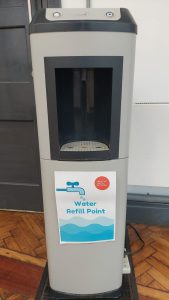 While waste generation is one of the main issues in the event industry, this can be mitigated through strategic planning. It is important to identify the main sources of waste before the event takes place, so that you can plan your waste management strategy accordingly. For example, minimising plastic waste can easily be done by replacing single use plastic products such as cutlery and plates with reusable options. You can also reduce the amount of single use plastic cups or bottles by asking people in advance to bring their own refillable bottles.
Reducing food waste is also crucial to providing support to the global sustainable goals. Collaboration with like-minded people will make a difference in creating a robust strategy to prevent food waste. You can join forces with caterers and venues that already have a plan to minimise food waste, and if they don’t, you can work together with a food bank or NGO to make sure that the surplus food is donated to those in need.
Giving less promotional products or goodies and requesting your sponsors to do the same are some other steps that can be taken to reduce waste.
Reuse – extend the lifespan of a product and its parts
Many objects used during an academic event can easily be reused. For instance, you can usu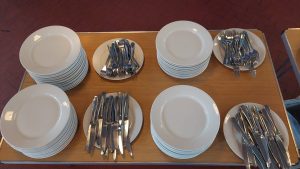 ally get 80-90% of the badge name wallets back at the end of the event. Nudging people about this during the event is essential to make sure you get most of the badge wallets back.
If your institute is organising multiple events per year, you can set up a common inventory and make all the objects that are still in good condition available to be reused for later events.
Recycle –upgrade or downgrade materials
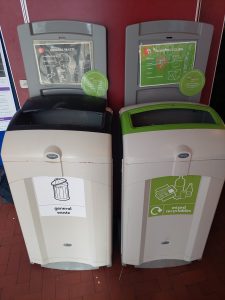 Lots of the materials used during events can be recycled. To make this process smoother, make sure that the products you are buying are manufactured out of materials that are easy to recycle. For instance, many banners are produced out of PVC plastic, a very dense and difficult to recycle type of material which will be difficult to handle when discarded. Consider alternative options that are made from more recyclable materials such as PET plastic or paper. Another great example is to consider buying name badges or any gift you would like to offer (although we advise to minimise goodies) that are manufactured from recycled and recyclable materials. Why not order a badge made from the wood of an old barrel? They are more environmentally friendly and it brings an interesting story to an object that would otherwise pass unnoticed.
As conferences are a place where scientists gather and share knowledge, it would make a difference to bring into the spotlight the positive impact of the circular economy principles you have put in practice as an organiser. Along with innovation, engaging people and encouraging them to start thinking of different ways to break the linear economy cycle will contribute greatly in redesigning our economy into a more circular format.
These three main principles are giving you a great start to reinvent the organisation strategy of events that gather scientists together in a manner that will not cost the earth. Circular economy is a rich aspect of sustainability that is strongly rooted in creativity. Keep an eye out for part 2 of this blog, where we will continue to explore more concepts of circular economy and how to apply them in academic events.
You must be logged in to post a comment.