

9 December 2025
As this year wraps up, The Company of Biologists celebrates 100 years of publishing. Looking back at all the biologists whose careers we have influenced and the science that we have helped advance, we cannot help but feel delighted at the impact we have made in the communities that we serve. As we reminisce about the past, one thing becomes clear: none of this would have been possible without our inspiring and motivated staff.
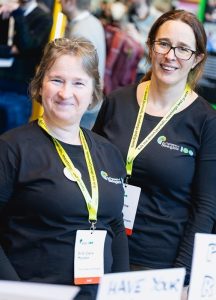
Our 67 employees work hard and support each other every day as they champion biologists. On the editorial side, the journal managers, Front Section Editors, Production Editors, Community Managers and Editorial Administrators keep the journals and community sites running smoothly and manage articles from submission to publication. The Technical Operations team, which includes Digital Multimedia Technicians, Publishing Systems Coordinators, Digital Content Specialists and our Data Protection Officer, ensures the quality of our published product and keeps our systems running. The Marketing team helps our messages reach the right people and sets the Company’s branding guidelines to closely reflect our bigger charitable ethos. The Sales team ensures the research community can access our journals through library subscriptions and – increasingly – Read & Publish agreements worldwide. Our Charity teams, including the Grants Administrator and Events teams, use our charitable funds to support the academic community of biologists. Finally, none of our operations would be possible without our Executive Assistant, HR Advisor and Accounts team, who keep everything running behind the scenes. All these teams work together to publish high-quality research and support projects that strengthen our scientific communities.
Over the years, our staff have woven into the Company’s legacy. It is heartening to realise that the Company has also become a part of their individual lives, even before some of them officially joined. Debbie Thorpe, Editorial Administrator for Disease Models & Mechanisms (DMM) and one of our employees with the longest tenure, was introduced to the Company and Journal of Experimental Biology (JEB) through her immediate family. “I first heard about the Company as a child; my Mum, Margaret Clements, was John Treherne’s secretary in the ’70s, working with the journal, JEB, even then. Later, she became a JEB Editorial Administrator,” notes Debbie. In 1996, Debbie became an Editorial Administrator across the Company’s journals. “Between my Mum, my Aunt Jenny Ostler, who worked as an Editorial Administrator for Development, and myself, I am pretty sure that our time with the Company adds up to 100 years,” states Debbie.
While family ties as entry points are rare among our employees, being an author in our journals is not. Researchers know how special it is to publish their first peer-reviewed manuscript. The Company is proud to have published the first papers of several researchers who have since gone on to work for us. Emma Kelly, Production Editor for JEB, published her first paper in Journal of Cell Science (JCS) in 2001. Two years later, Katherine Brown, Publishing Director, authored her first paper in Development. “When I was writing up my first paper towards the end of my PhD, my PI had just joined the Company as a Director. Development’s stellar reputation in the field, along with its links to the British Society for Developmental Biology (of which I was a member), made the journal the obvious choice for publishing my work,” Katherine notes.
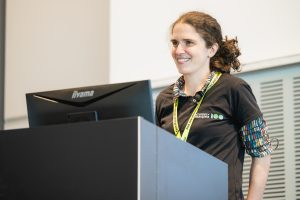
In 2007, Helen Zenner, FocalPlane Community Manager and Online Editor for JCS, published her first peer-reviewed article in the journal where she now works. “My first paper was published in JCS. The paper is co-authored with Lucy Collinson, who is now on the FocalPlane Scientific Advisory Board! The next year, JCS also published my first review,” says Helen. Another full circle moment came for Andrea Murillo, who published her first paper in JEB as an undergraduate in 2015 and now works as a Science Communications Officer for the Company. “Not only did JEB publish my first-ever paper, but they also gave me my start in science writing. When I was a PhD student during the pandemic, Kathryn Knight, JEB News & Views Editor, taught me how to be a science storyteller as part of the Outside JEB team for three years. Being a Science Communications Officer with the Company has further cemented my passion for engaging with early-career researchers and telling their stories as my career path,” notes Andrea.
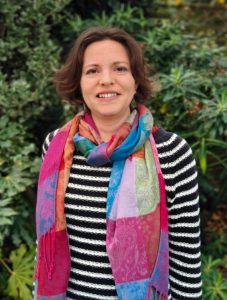
Many of our staff were readers and authors before they became colleagues at the Company. We are happy to share that at least nine other current employees have published in our journals at different points in their careers. For example, Alejandra Clark, Managing Editor of Biology Open, published her inaugural first-author work from her PhD in Development. Additionally, Charlotte Rutledge, now Senior Editor at JEB, had a paper from her PhD published in Development shortly after joining the Company as a Production Editor for JCS. “I received the author proofs for my Development paper within the first few weeks of starting at the Company, so I wasn’t yet well known by staff from other journal teams. The Development Production Editors were a little surprised when I changed my contact details on the proof from my university address to The Company of Biologists’ one!” says Charlotte. It is truly a privilege for the Company to see our authors go on to help shape the future of our journals – and a testament to the ethos of the organisation that it’s proved such a draw as an employer.
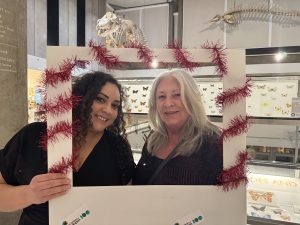
As a Company, we have always encouraged new approaches and value our willingness to experiment. Mandy Knowles, Marketing Administrator, joined the Company in 1996 as a JCS Administrative Assistant when the journal was trialling centralising the administration of incoming manuscripts. “Prior to the trial, authors would send their manuscript to whichever Editor they felt was suitable to manage their research paper. The manuscript processing procedure would then be managed by the assigned Editor and their secretaries, who could be located anywhere around the world. Accepted manuscripts were then processed via the Production team in our Cowley Road (Cambridge) office and printed onsite. In my role during this trial period, we would receive four copies of manuscripts that arrived in a large package and the details were entered manually into FileMaker. An Editor would be assigned, reviewers contacted and assigned, with all this communication carried out by fax. The manuscripts were then sent to willing reviewers worldwide. At that time, reviewers were paid £15 per paper!” recalls Mandy. With the trial deemed successful, the Company has been fortunate enough to have Mandy working for us for 25 years, taking on different roles within the Company as a Development and JEB Editorial Administrator, before joining the growing Marketing team. Mandy’s embrace of change is something we value and a characteristic that other colleagues share.

Whether it is implementing a system or launching a new charity initiative, our staff are passionate about the changes that we trial and eventually get implemented if deemed successful. “What I value most about working with The Company of Biologists is their willingness to embrace fresh ideas to create new opportunities and projects. The Workshop Committee were very supportive in implementing the Global South project, which was a change to the existing Workshop programme, so it was great to be able to get backing to try out new ideas,” says Frank O’Donnell, Senior Events Manager. Indeed, one of the main reasons that we are innovators in the way we do things is because our staff are forward-thinking and enthusiastic about executing new ideas; we could not achieve this without their inspiration.
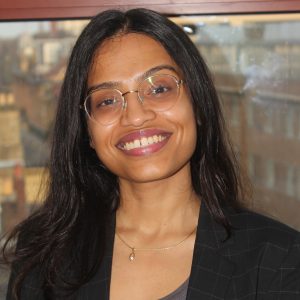
Our different community sites help scientists connect and share resources, news, and opportunities and are a prime example of initiatives that we have launched to directly support our community. These platforms have even played a role in some of our employees’ early careers. For example, Saanjbati Adhikari started as a preLighter during her PhD in London, UK, before becoming a Cross-Title Features Editor across our journals for our 100-year anniversary. She is now a Reviews Editor for Development. Dina Mikimoto, DMM Reviews Editor, served as a correspondent for the Node while working as a researcher in Japan. “A broken 3D printer gave me a rare pause in the chaos of research, and in that quiet space, I picked up a pen again and rediscovered why I have always loved writing (and editing). Working with the Node as a correspondent reminded me that science communication is not about chasing headlines – it is about people, purpose and making science human. And, eventually, remembering this led me to become a scientific editor,” recalls Dina. Our community sites also host job boards to inform researchers about the different opportunities available, which eventually led Katherine Brown to her previous role with Development. “I spotted the Development Executive Editor role while browsing the Node (three days before application deadline date) – otherwise I’d never have ended up working here,” notes Katherine.
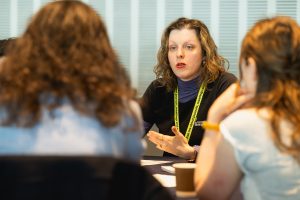
“Marking our 100 anniversary has been a wonderful excuse to celebrate everything we do at The Company of Biologists, from journals and community sites to scientific meetings and our charitable grants,” says Claire Moulton, the Company’s Chief Executive Officer. “All of this is powered by our staff, many of whom work quietly ‘behind the scenes’. It’s been lovely to read this collection of stories, which really captures the dedication and enthusiasm of the individuals who make everything happen – and who make it a lovely place to work!” notes Claire. Like many of our team, Claire’s connection to the Company started well before she joined us, as a journal reader and recipient of a Company travel grant from the British Society for Developmental Biology. “It’s my absolute honour to thank all of our employees – past and present – for everything they’ve done and continue to do on behalf of The Company of Biologists,” emphasises Claire.
You must be logged in to post a comment.