

Physics of the Early Embryonic Cell Divisions
Date: 11 – 14 November 2024
Location: Buxted Park, East Sussex, UK
Organisers: Lendert Gelens and Julia Kamenz
Early embryogenesis constitutes a biological and physical conundrum: How can a single fertilized cell self-organize into a highly complex multicellular organism? Huge physical and biological challenges are associated with this task:
- The embryo is often orders of magnitude larger than the arising somatic cells. Nevertheless, it divides more rapidly, synchronously and robustly.
- Despite being largely transcriptionally silent, the early embryonic divisions establish the accurate patterns and geometries essential for later development and differentiation.
- Error-correcting mechanisms such as cellular checkpoints generally perform poorly in early embryos, raising the question how precision and embryonic fidelity are assured.
Recent advances in microscopy of the living embryo (e.g., light sheet microscopy and the development of activity- and force-measuring biosensors) as well as complementary in vitro and embryoid systems have made the early embryo amenable to highly quantitative temporal and spatial measurements. Combining these quantitative methodologies with the appropriate mathematical and physical frameworks, will enable us to identify the core physical principles defining early embryogenesis, develop predictive quantitative models of this process and push the boundaries of our understanding about this fundamental process of life.
Although the early embryonic development has fascinated both theoreticians and experimentalists for a long time, we recognize that subfields have drifted apart. This workshop will bridge this gap and bring together theoreticians and experimentalists studying the early embryonic processes in different organisms. The common platform will allow us to discuss new discoveries, concepts, and perspectives and develop a coherent understanding and language. In this way, we hope facilitate new collaborations and strengthen this highly interdisciplinary community.
Organisers & speakers
Lendert Gelens KU Leuven, Belgium
Julia Kamenz University of Groningen, The Netherlands
Sophie de Buyl VUB, Belgium
Stefano Di Talia Duke University School of Medicine, USA
Jordi Garcia Ojalvo Universitat Pompeu Fabra Barcelona, Spain
Nathan Goehring The Francis Crick Institute, UK
Andrew Goryachev University of Edinburgh, UK
Jennifer Landino Geisel School of Medicine at Dartmouth, USA
Nicolas Minc Institut Jacques Monod, France
Nicoletta Petridou EMBL, GermanyRob Phillips California Institute of Technology, USA
Diana Pinheiro Research Institute of Molecular Pathology, Austria
Simone Reber MPI for Infection Biology, Germany
Jonathan Rodenfels MPI for Molecular Cell Biology and Genetics, Germany
Silvia Santos The Francis Crick Institute, UK
Sebastian Streichan University of California, Santa Barbara, USA
Hervé Turlier Collège de France, France
Qiong Yang University of Michigan, USA
Early-career researchers
We offer 10 funded places for early-career researchers (PhD, postdocs and PIs in the first three years of their first appointment) to attend our Workshops along with the 20 invited speakers. We just ask that you pay for your own travel costs. If you would like to attend please complete the online application form and include a one page CV and a letter of support from your supervisor. If your supervisor would prefer to send the letter directly to us please ask them to email it to workshops@biologists.com
All attendees are expected to actively contribute to the Workshops by asking questions at presentation sessions and taking part in discussions, as well as giving a short talk on their research.
At some Workshops, early-career researchers are given additional responsibilities to promote their involvement, such as:
- Write a daily blog for The Node
- Summarise the previous day’s themes to set the scene for the next day’s sessions
- Propose future directions and collaborations
- Make a short two minute video on their experience at the Workshop
Most of these activities would be carried out in pairs or small groups and often with the support of more senior scientists present.
About Buxted Park
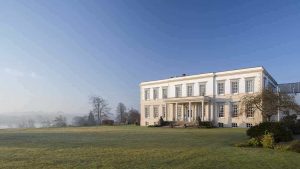
The Workshop will be held at the beautiful Buxted Park in East Sussex which dates back to the 12th century. The current house was built in 1722 by Sir Thomas Medley and is an elegant Grade II Palladian mansion set in 312 acres of parkland. Over the years it has played host to a number of high profile visitors including William Wordsworth, Winston Churchill, and George V and Queen Mary. Whilst it was a health hydro in the 1960s Gregory Peck, Dudley Moore and Marlon Brando were regular visitors.
Buxted Park is less than 25 miles from Gatwick Airport and 60 miles from Heathrow Airport. There are direct trains taking 1 hour 10 minutes from London Bridge to the village of Buxted which is only a mile away from the hotel.
Buxted Park Hotel
Station Road
Buxted
East Sussex
TN22 4AY
Tel: +44 (0) 1825 733333
You must be logged in to post a comment.